
What will you do in case of conflict of stakeholders, during or prior to project?
This presentation will help you prepare for the Project Management Professional (PMP) Exam by PMI. It is a comprehensive, in-depth guide covering topics related to Stakeholder Management.
The document can be used for PMP candidates, PMP instructors, consultants, and even non-project managers.
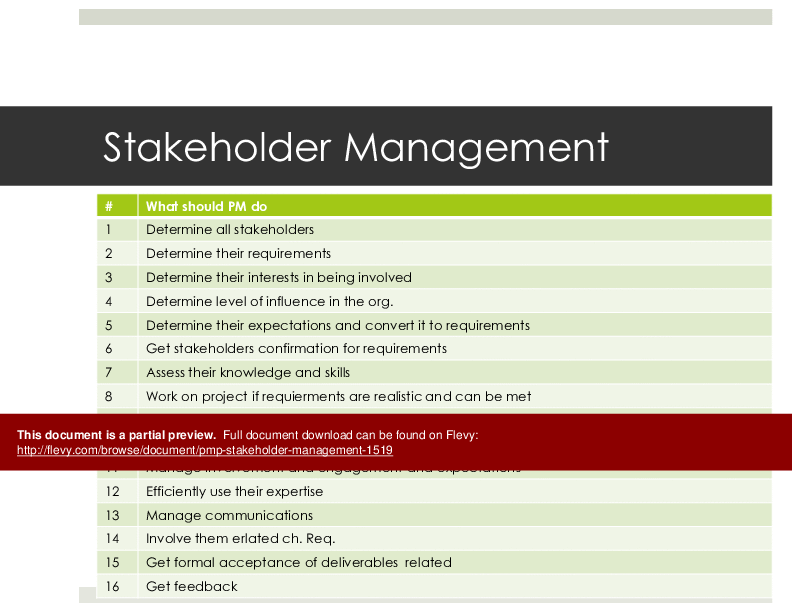
This PPT dives deep into the intricacies of stakeholder management, providing a structured approach to identifying, analyzing, and engaging stakeholders. It outlines the critical steps a project manager must undertake, from determining all stakeholders to efficiently using their expertise. This guide ensures that project managers can convert stakeholder expectations into actionable requirements, assess their influence, and manage their engagement effectively.
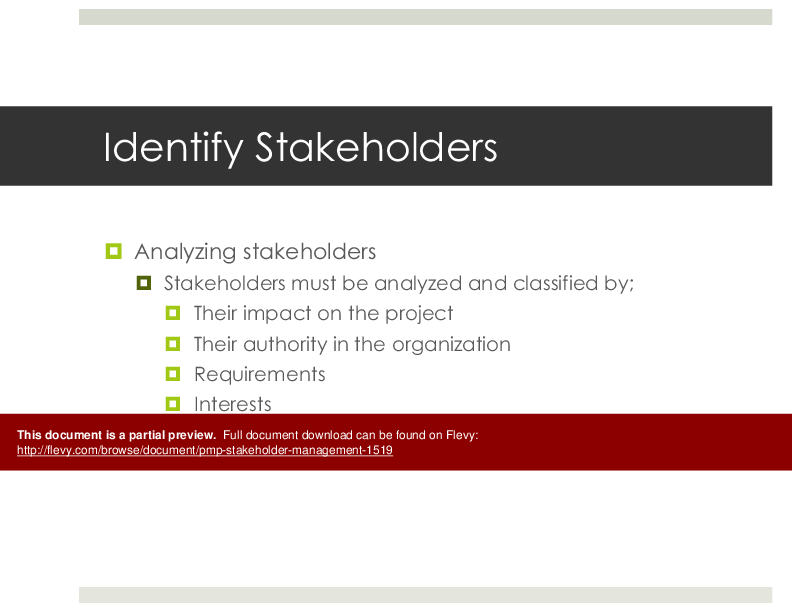
The presentation also emphasizes the importance of stakeholder analysis, detailing how to classify stakeholders based on their impact, authority, requirements, and interests. It provides practical tools and techniques for stakeholder analysis, including expert judgment and stakeholder meetings, ensuring that project managers can maintain a comprehensive stakeholder register. The document further explains how to manage stakeholder expectations through effective communication and negotiation, ensuring that project goals are met and stakeholder concerns are addressed promptly.
The guide includes actionable insights on controlling stakeholder engagement, such as evaluating stakeholder relationships, reassessing the stakeholder register, and comparing actual versus planned engagement. It highlights the significance of maintaining open and honest communication with stakeholders to foster better relationships and achieve project success. This document is an essential resource for project managers aiming to master stakeholder management and drive their projects to successful completion.
Got a question about the product? Email us at support@flevy.com or ask the author directly by using the "Ask the Author a Question" form. If you cannot view the preview above this document description, go here to view the large preview instead.
Executive Summary
The PMP Stakeholder Management presentation provides a structured approach to effectively engage stakeholders throughout the project lifecycle. This guide emphasizes the importance of identifying stakeholders early, understanding their needs and expectations, and managing their involvement to enhance project success. By utilizing proven strategies and tools, project managers can ensure that stakeholder interests are aligned with project goals, ultimately leading to improved outcomes and satisfaction.
Who This Is For and When to Use
• Project Managers overseeing complex projects with multiple stakeholders
• Team Leaders responsible for stakeholder engagement and communication
• Change Managers facilitating project transitions and stakeholder buy-in
• Executives seeking to understand stakeholder dynamics in project success
Best-fit moments to use this deck:
• During project initiation to identify and analyze stakeholders
• In planning sessions to develop stakeholder management strategies
• At project milestones to assess stakeholder engagement and satisfaction
• When addressing stakeholder concerns or conflicts that may arise
Learning Objectives
• Identify key stakeholders and assess their influence and interest
• Develop a stakeholder management plan that aligns with project objectives
• Manage stakeholder engagement effectively throughout the project lifecycle
• Control stakeholder communications to ensure transparency and trust
• Address stakeholder concerns proactively to mitigate risks
• Foster positive relationships with stakeholders to enhance project support
Table of Contents
• Introduction to Stakeholder Management (page 1)
• Identifying Stakeholders (page 9)
• Stakeholder Analysis Techniques (page 13)
• Planning Stakeholder Management (page 21)
• Managing Stakeholder Engagement (page 33)
• Controlling Stakeholder Engagement (page 44)
Primary Topics Covered
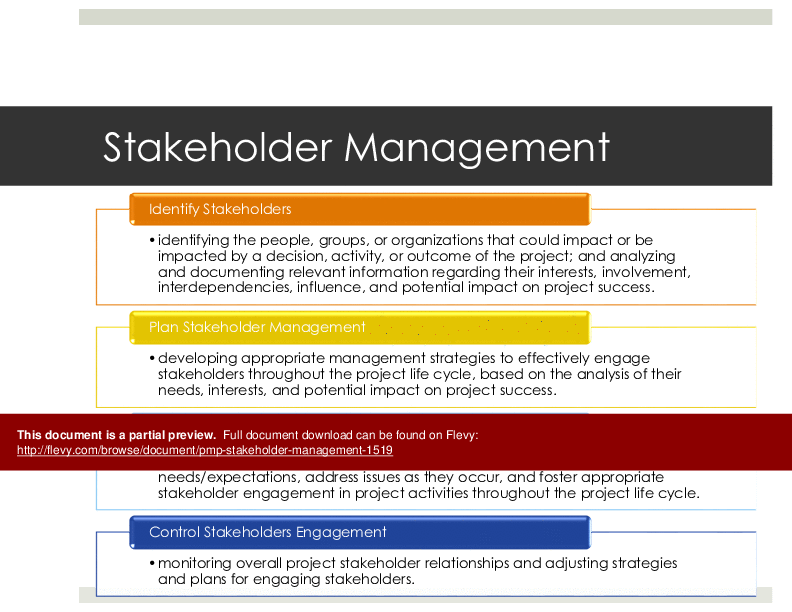
• Identify Stakeholders - Early identification of stakeholders is crucial to prevent project delays and cost overruns. Stakeholders include anyone who can affect or be affected by the project.
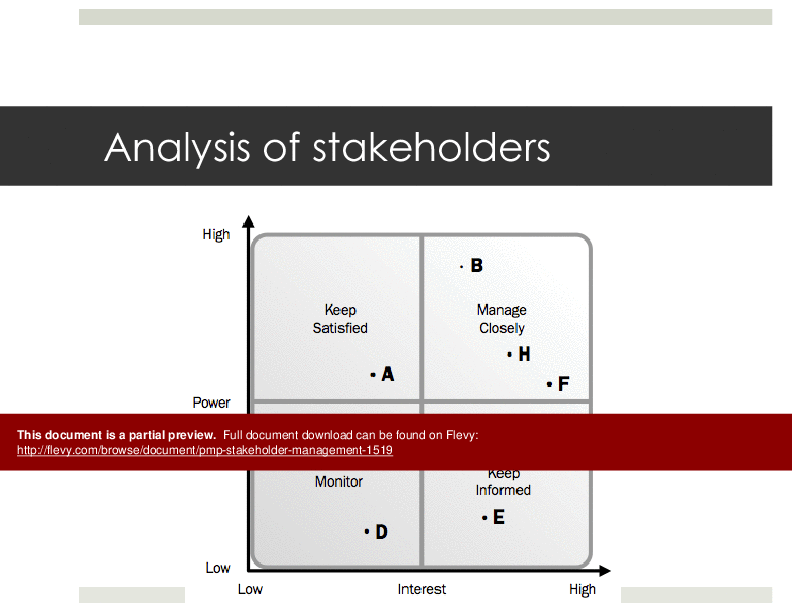
• Stakeholder Analysis Techniques - Various methods, such as power/interest grids and salience models, are used to classify stakeholders based on their influence and interest levels.
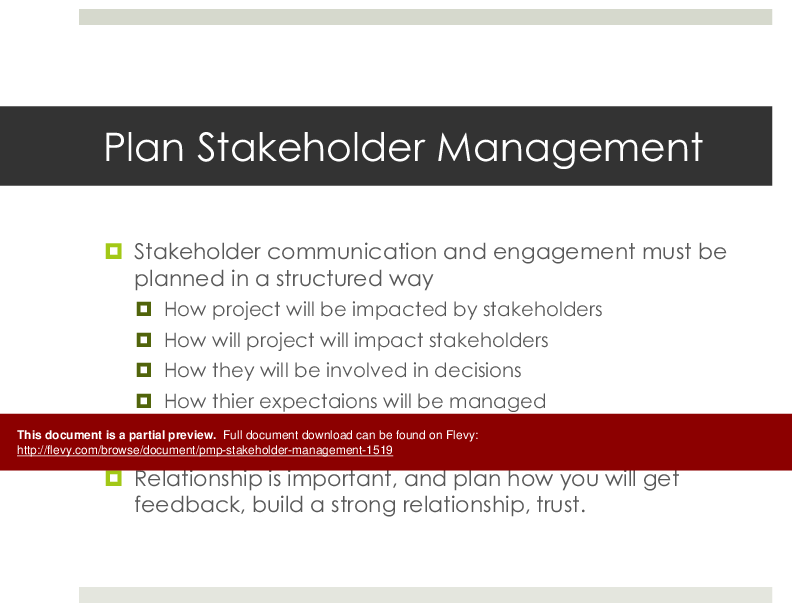
• Plan Stakeholder Management - Developing a structured plan to engage stakeholders effectively throughout the project lifecycle based on their needs and expectations.
• Manage Stakeholder Engagement - Activities focused on maintaining stakeholder commitment and addressing their concerns to ensure project success.
• Control Stakeholder Engagement - Monitoring stakeholder relationships and adjusting strategies as necessary to enhance engagement and satisfaction.
Deliverables, Templates, and Tools
• Stakeholder register template for documenting stakeholder information
• Stakeholder engagement assessment matrix for tracking engagement levels
• Communication management plan template for structured stakeholder communication
• Issue log for documenting and resolving stakeholder concerns
• Stakeholder management plan for outlining engagement strategies
Slide Highlights
• Overview of stakeholder management processes and their importance
• Detailed flowchart illustrating the steps in stakeholder identification and engagement
• Examples of stakeholder analysis grids for visualizing influence and interest
• Case studies showcasing successful stakeholder engagement strategies
• Templates for stakeholder registers and management plans
Potential Workshop Agenda
Stakeholder Identification Workshop (90 minutes)
• Discuss the importance of early stakeholder identification
• Conduct a brainstorming session to list potential stakeholders
• Develop a preliminary stakeholder register
Stakeholder Engagement Strategy Session (120 minutes)
• Review stakeholder analysis techniques and their application
• Create a draft stakeholder management plan
• Identify communication methods and engagement strategies
Customization Guidance
• Tailor the stakeholder register to include specific project-related fields
• Adjust communication methods based on stakeholder preferences and needs
• Update the stakeholder management plan as project phases evolve
Secondary Topics Covered
• The role of stakeholder satisfaction in project success
• Techniques for managing conflicting stakeholder interests
• Best practices for ongoing stakeholder communication
• The impact of stakeholder engagement on project outcomes
Topic FAQ
Document FAQ
These are questions addressed within this presentation.
What is the purpose of stakeholder management?
Stakeholder management aims to identify, analyze, and engage individuals or groups that can impact or be impacted by a project, ensuring their needs and expectations are met.
How do I identify stakeholders effectively?
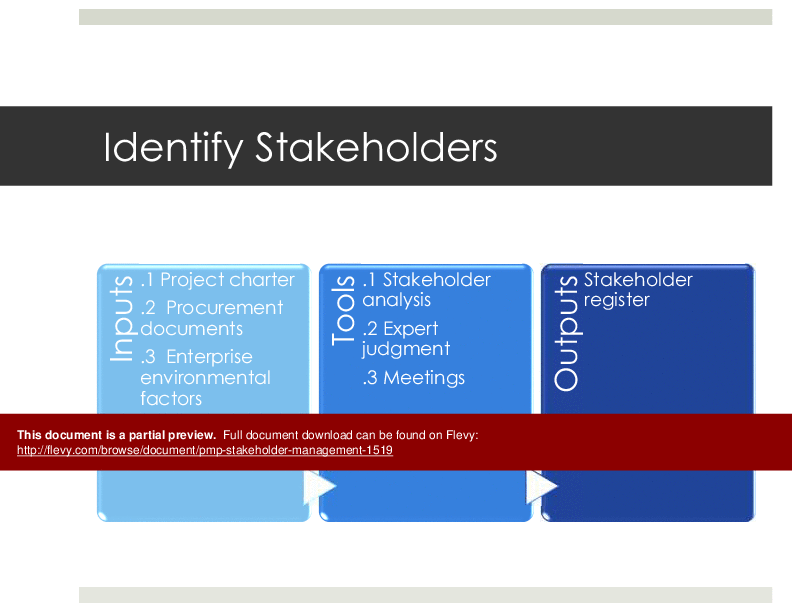
Identify stakeholders early in the project by reviewing project charters, procurement documents, and organizational factors, and involve the project team in the identification process.
What tools can help in stakeholder analysis?
Tools such as stakeholder analysis grids, engagement assessment matrices, and communication management plans can aid in understanding stakeholder influence and engagement levels.
How often should I update the stakeholder register?
The stakeholder register should be updated regularly, especially when new stakeholders are identified or when existing stakeholders' influence or interest levels change.
What are the key components of a stakeholder management plan?
A stakeholder management plan typically includes stakeholder identification, engagement strategies, communication methods, and methods for monitoring stakeholder satisfaction.
How can I manage conflicting stakeholder interests?
Address conflicting interests by facilitating open communication, negotiating compromises, and ensuring that all stakeholders feel heard and valued.
What is the significance of stakeholder engagement in project success?
Effective stakeholder engagement increases project buy-in, reduces resistance, and enhances collaboration, ultimately leading to improved project outcomes.
How do I measure stakeholder satisfaction?
Stakeholder satisfaction can be measured through surveys, feedback sessions, and monitoring engagement levels throughout the project lifecycle.
Glossary
• Stakeholder - Individuals or groups who can affect or be affected by a project.
• Stakeholder Register - A document that lists all identified stakeholders and their relevant information.
• Engagement Assessment Matrix - A tool used to evaluate current and desired levels of stakeholder engagement.
• Communication Management Plan - A plan outlining how project information will be communicated to stakeholders.
• Issue Log - A record of stakeholder concerns and issues that need to be addressed.
• Stakeholder Management Plan - A comprehensive plan detailing how stakeholders will be engaged throughout the project.
• Power/Interest Grid - A tool for classifying stakeholders based on their level of authority and concern regarding project outcomes.
• Salience Model - A framework for categorizing stakeholders based on their power, urgency, and legitimacy.
• Stakeholder Analysis - The process of identifying and assessing stakeholder interests and influence.
• Engagement Level - The degree of involvement and support a stakeholder has in a project.
• Communication Methods - Various approaches used to convey information to stakeholders.
• Management Skills - Skills required to coordinate and lead stakeholder engagement efforts.
• Interpersonal Skills - Skills necessary for building relationships and resolving conflicts with stakeholders.
• Organizational Process Assets - Existing processes and documents that can aid in stakeholder management.
• Work Performance Data - Information collected regarding project performance and stakeholder engagement.
• Change Requests - Formal proposals for modifications to project scope or plans based on stakeholder feedback.
• Project Documents Updates - Revisions made to project documentation based on stakeholder interactions and changes.
• Feedback - Information received from stakeholders regarding their experiences and satisfaction with the project.
• Lessons Learned - Insights gained from stakeholder management experiences that can inform future projects.
Source: Best Practices in Stakeholder Management PowerPoint Slides: PMP Stakeholder Management PowerPoint (PPTX) Presentation Slide Deck, gureser
This document is available as part of the following discounted bundle(s):
Save %!
PMP Exam preparation - Full training material
This bundle contains 11 total documents. See all the documents to the right.
|
Download our FREE Organization, Change, & Culture, Templates

Download our free compilation of 50+ slides and templates on Organizational Design, Change Management, and Corporate Culture. Methodologies include ADKAR, Burke-Litwin Change Model, McKinsey 7-S, Competing Values Framework, etc. |









